

Life lessons from layoffs
The media has a problem remembering its own history and financial chaos. Journalists must plan accordingly to avoid surprises.

Welcome back to Don’t Forget My Voice, a newsletter to help you navigate journalism’s chaotic and toxic maze. I’m Mc Nelly Torres, a longtime investigative journalist, editor, trainer and mentor.
The memories about this day had faded over time.
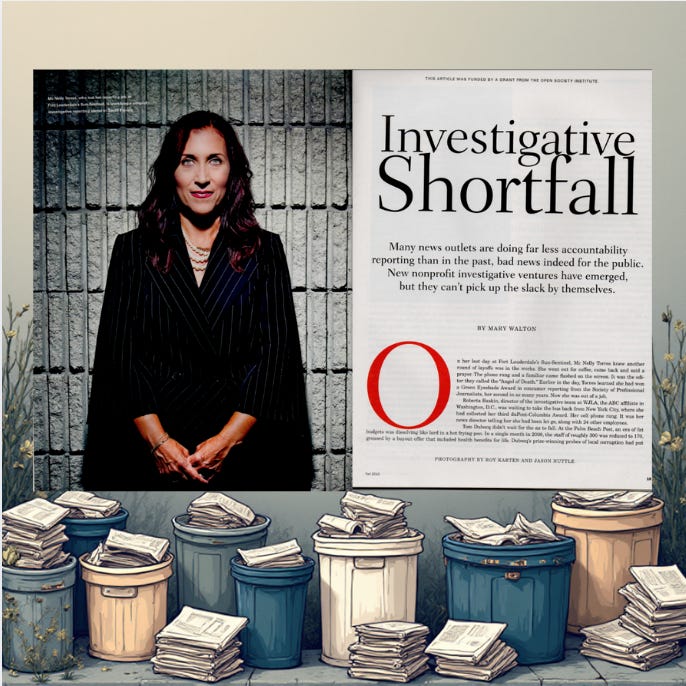
But as I read the headlines last week about NBC laying off 150 people and The Wall Street Journal cutting reporters and editors at the health and science teams, I decided to revisit a painful event when I was laid off from the South Florida Sun-Sentinel, now known as SunSentinel, in 2009.
It had been a tumultuous time at the Tribune Co. after it filed for bankruptcy 12 months after eccentric Chicago billionaire Sam Zell, who’d made his money in real estate, not journalism, acquired the company in 2007.
The newspaper was among several properties owned by the Tribune Co. that included the Chicago Tribune, the Los Angeles Times, The Baltimore Sun and the Orlando Sentinel.
By 2008-09, the financial crisis had hit Florida after the real estate market collapsed and it became commonplace to read about staff cuts in newspapers in Florida every other month.
At the SunSentinel, all my friends, mentors and the editors who hired me were let go before I was. The SunSentinel was a large newsroom when I came to work there in 2005, with more than 400 staff members in editorial alone.
One May morning in 2009, I woke up with a gut feeling I can’t explain; I was anxious but I didn’t know why. I drove to the mother ship building on Las Olas Boulevard in Fort Lauderdale and focused on the work.
I was deep into writing a story about supermarket safety and health inspections; I’d obtained several years of digital inspection data to start.
Up to that point, I had produced data-driven stories on safety and health inspections on nail salons, restaurants, gasoline pumps and fuel/diesel tanks. Some of these projects had garnered state, regional and national awards.
Sometime that morning, I saw Executive Editor Earl Maucker while I was walking to the bathroom. He did not say hello, as he often did, or look at me. It was as if I wasn’t there.
That’s how I knew that my time had arrived. I went to the bathroom. I said a little prayer and went outside for a walk.
After I returned to the newsroom, I was walking toward my desk when someone shouted: “Congratulations, Mc Nelly!”
I was confused. But when I sat behind my computer and opened the email from the Society of Professional Journalists, I learned I was among the finalists for a Green Eyeshade Award, an accolade for excellent work from journalists in the southeast United States.
That was nice, I thought.
Moments later, my phone rang. The name of the “Angel of Death” appeared on the small screen. This was the nickname we’d given to the deputy managing editor who was leading the layoffs.
My gut feeling of dread was justified after I took the call. I was one of 30 people laid off that day.
It didn’t matter that my work on bad contractors led to two arrests or that my investigations on foreclosure scams and mortgage fraud had led the attorney general to sue the companies and the man stealing homes from Floridians. It didn’t matter that my work prompted state legislators to approve new laws to protect consumers against foreclosure rescue scams. Nor was it important that I was the first Latina elected to the Investigative Reporters and Editors’ board of directors and was serving my term.
When I visited with the human resources person and the “Angel of Death,” they told me I had two choices — I could stop working that day and go home or continue working until 10 days later. I would be compensated either way, they said.
Completing the work on the supermarket story was my priority so I decided to stay. It was a bad decision. I was naïve and shocked. I believed the business editor’s promises about working with me to publish the work and get the credit I was due.
But that never happened.
Months later, the story was published on a Sunday with no bylines. My misspelled name was a tagline at the end of the story. I was upset at this, but not surprised.
Richard Prince, who has written about journalists of color and the media for decades, reported about journalists of color losing their jobs wrote on About Journali-sms column:
“Flash-forward to Sunday. The story was published on the newspaper’s front page, but there was no byline on the story at all, which is highly unusual for an investigative piece. At the bottom of the text, it was noted that the article was written by another staff writer (and it had been rewritten, with essentially the same content). Torres was given only a contributing line on the story she’d birthed. Adding insult, the newspaper got her name wrong, leaving out the space between Mc and Nelly. After Torres wrote for the newspaper for four years, you might think they’d remember how her name goes.”
I’d forgotten about this until I came across the blog post while revisiting this painful time to write this piece. Some things are better left in the past.
Looking back, I know I should have packed my stuff and gone home after the “Angel of Death” dialed my extension. Sometimes, we hold people to the same standards of virtue to which we hold ourselves and then are disappointed when we discover that they fall short. It turns out they are humans looking after their own interest.
Mourning and growing
I managed the loss of my job perhaps in the worst possible way. I didn’t take a break as many of my friends suggested. Soon I was writing about the foreclosure crisis in the United States for online publications like consumeraffairs.com.
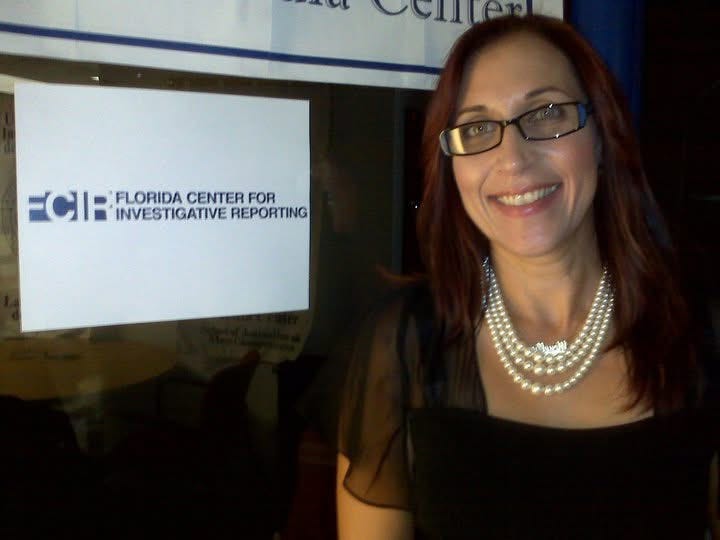
Then, I joined efforts with another individual I didn’t know well before a mutual friend got us together to build an investigative nonprofit in Florida — Florida Center for Investigative Reporting.
Losing a job is stressful, but it is one many of us have survived. I learned that you can’t move on and take care of business if you don’t face what’s in front of you and take care of yourself. That should always be the top priority.
There are short-term tasks you must tackle after a layoff, such as adjusting your budget, reviewing that severance package carefully (more on that in the future), filing for unemployment benefits and exploring health insurance options.
These are some important self-care tips:
🕰️ Take time to process your emotions. A layoff is a loss and grieving is normal. Allow yourself to feel anger, sadness or frustration. Avoid rushing into the job hunt.
🗓️ Develop a routine. A daily routine provides a sense of structure. Set times for job searching, exercise and connecting with other people. I write a list of tasks I want to accomplish each week and then plan my schedule around that.
👩🏽💻 Separate your identity from your job. This is tough for journalists, but remember your industry does not define your worth. Create a “nonfinancial asset list” of qualities you like about yourself to help boost your self-esteem. Maybe there’s something you want to explore outside journalism or an area of journalism you would like to tackle next.
👫 Seek support. Avoid isolating yourself. Try to socialize with a trusted support system of friends outside journalism, family members or a therapist. Join a support group with other job seekers.
The recurring purge
Since Donald J. Trump began his second presidential term, journalists across media platforms, including prominent Black journalists such as Joy-Ann Reid and Tiffany Cross have been pushed out as the media ecosystem struggles and consolidates.
As Yesha Callahan wrote for BET in February, these are not isolated incidents.
“At HuffPost, mass layoffs in recent years disproportionately affected Black and other journalists of color, gutting the newsroom of diverse voices. The Los Angeles Times just went through another brutal round of cuts. And let’s not forget when The New York Times pushed out its first Black executive editor, Dean Baquet, despite his years of exceptional leadership,” Callahan wrote.
These purges are nothing new, but people tend to forget about them. (Easy to do in this frenetic news cycle). They are systemic and always target journalists of color but also experienced journalists who were editors — assignment editors, line editors or copy editors.
I’ve lived through multiple layoffs at the Sun Sentinel where the vast majority of people laid off between 2007-09 were people of color.
But there was another casualty during the Great Recession — investigative journalists.


Watchdog reporters were losing their jobs when the public needed investigative reporting to see injustices, wrongdoing, corruption and waste.
“Researchers are trying to quantify exactly how many investigative reporters have been lost, but clearly the numbers are large,” according to what Exposé original investigation found on its series entitled, “The Withering Watchdog” focusing on the newspaper industry. “They include those who, like Torres, might not have carried the title on their business cards, but did the complex, time-consuming work to unravel information for the public good.”
Laura Frank, an investigative reporter who lost her job after Denver’s Rocky Mountain News folded, wrote on that 2009 piece that led with my personal story: “When faced with cuts, investigative reporting is the first target. Investigative journalism takes more time and more experienced journalists to produce and it often involves legal battles. It’s generally the most expensive work the news media undertake.”
The situation was dire and other publications covering the media published work about the topic, too.


In 2010, the now defunct American Journalism Review published a deep dive titled “Investigative Shortfall” showing the alarming decline in investigative reporting and how investigative nonprofits could emerge to fill that void.


Though I hated to revisit the pain of losing my job, I understood that this was bigger than me. That’s why I shared my story.
This moment in my life and career has always been a reminder of my strength, courage and perseverance.
When I lost my job in 2009, I thought it was the end of my world.
But it wasn’t. I reinvented myself, survived and moved on.
Follow Mc Nelly on Bluesky, Threads, LinkedIn, X, Substack Notes and be part of the community I’m building online. Drop me a note if you want to provide feedback, would like me to discuss a specific subject, collaborate or just to say hello at mcnellytorres@substack.com. Join our chat room here.

Never miss an update—every new post is sent directly to your email inbox. For a spam-free, ad-free reading experience, plus audio and community features, get the Substack app.
Tell me what you think
Be part of a community of people who share your interests. Participate in the comments section, or support this work with a subscription.
Thanks for sharing Pablo! Like they say: when one door closes many more open.
Good advice McNelly.
I've been laid off in journalism four times, once for each of the past four decades. And I tell others now: You will be fine. It won't be easy. But the right opportunity is out there now actively searching for you. Take time off and enjoy it while it lasts, because it will be over soon.
I'm convinced that creating your own belief in your invincibility actually does create opportunities. Somehow your positive life force aligns itself with the universe. And employers are looking for that magic.